Adhesive residue on walls is a common problem, whether it comes from stickers, tape, hooks, or wallpaper. While it may seem difficult to remove, the right techniques can help you get rid of sticky residue without damaging your paint or drywall. This guide will walk you through simple, effective methods to safely remove adhesive from walls using everyday tools and products.
Why Adhesive Residue Sticks to Walls
Adhesives are made to stick very well to surfaces, so it is likely to leave a residue after removal. With time, this residue may become hard or accumulate dust, thus becoming even more noticeable. The ease of removing the adhesive also depends on the type of wall finish, which could be painted, wallpapered, or bare drywall.
Being aware of the conditions will assist you in selecting the most effective and safe way of removal.
Essential Tools and Materials
Before you start, you need to prepare some basic supplies.
You don’t need everything on this list, but having options helps:
- Warm water
- Mild dish soap
- White vinegar
- Baking soda
- Sponge or soft cloths
- Scraper or old credit card (plastic)
- Hair dryer
- Wiping alcohol or glue remover
- Paper towels
It is advisable to use soft tools so that you do not scratch or peel your wall surface.
Step-by-Step Methods to Remove Adhesive
Start with Warm Soapy Water
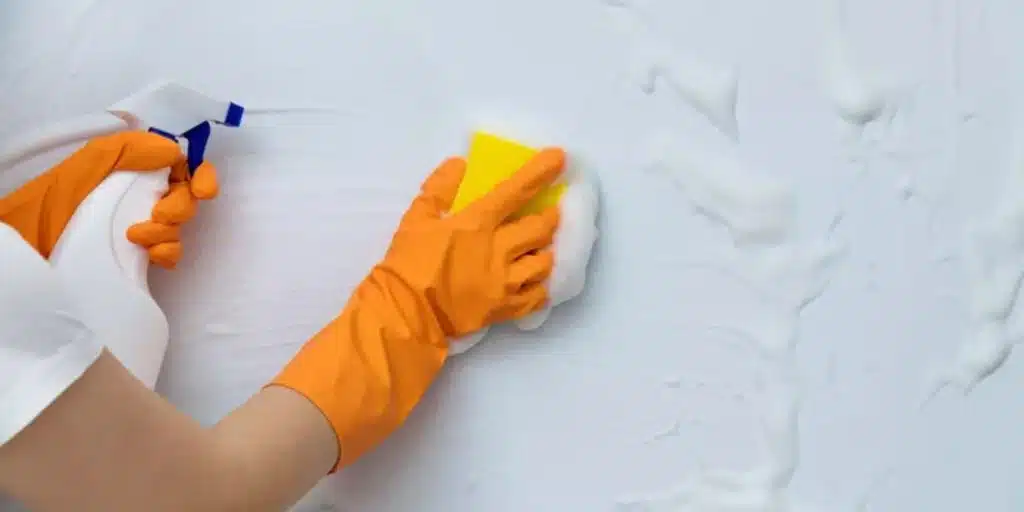
- Add some dish soap to warm water
- Wet a soft cloth or sponge with the solution
- Rub the sticky area softly in circles
- Allow the solution to rest a couple of minutes to soften the glue
- Clean off with a wet towel and dry
This technique is effective on light amounts of adhesive residue and is non-harmful to most painted walls.
Use Heat to Soften the Adhesive
Stubborn glue can be softened with heat, and it can be easily removed.
- Set a hair dryer to medium
- Heat the area 20-30 seconds within a few inches of the adhesive
- When the glue is softened, scrape it off using a plastic scraper
- Clean with a wet cloth
Always ensure not to overheat the wall, particularly when it is painted because too much heat may lead to bubbles or peeling of the paint.
Vinegar or Baking Soda Solution
Most surfaces can be cleaned with natural cleaning solutions, which are safe.
Vinegar Method:
- Combine 1/2 vinegar and warm water
- Use a cloth to apply it to the adhesive
- Allow some time to elapse
- Wipe and scrub lightly until the residue is removed
Baking Soda Method:
- Add a little water to baking soda to create a paste
- Apply it on the sticky portion
- Gently rub with a soft cloth
- Wipe off with water
These techniques are particularly useful for moderate residue, without harsh chemicals.
Use Rubbing Alcohol or Adhesive Removers
For harder-to-remove adhesive, a more powerful solution might be required.
- Place a bit of rubbing alcohol on a pad or cloth
- Apply it to the glue
- Allow to dry a little, and wipe off the glue
- Repeat if necessary
Commercial adhesive removers can also be used, but should be tested on a small area that is not visible to make sure that they do not destroy the paint.
Gently Scrape Off Remaining Residue
If there is any adhesive left:
- Wipe with a plastic scraper or credit card
- Lightly scrape the residue
- Do not use metal tools; this may scratch the wall
Best results are obtained by combining scraping with one of the liquid methods.
Tips to Protect Your Walls
The process of removing adhesive should be done carefully to prevent damages.
Remember the following tips:
Test first: It is always advisable to test your desired method on a small, inconspicuous area.
Be gentle: Do not scrub or use sharp objects.
Don’t oversaturate: Excessive liquid may ruin drywall or run behind paint.
Work Slowly: Haste may cause peeling of paint or marks.
If the paint on the wall is removed a little, you might have to do slight touch-ups later.
When to Repaint the Area
Removal of adhesives may sometimes result in discoloration or slight damage. Repainting can be the most appropriate in such situations.
- Wipe off and dry the wall
- Smooth out any coarse areas
- Use a primer as necessary
- Coat the area to have a smooth even surface
Repainting will make sure that your wall appears new and with no remaining marks.
Common Mistakes to Avoid
To ensure successful adhesive removal:
- Avoid using sharp metal tools which scratch the surface
- Do not use excessive force in scraping
- Leave out the patch test prior to using chemicals
- Ignore the type of wall finish
- Use a hair dryer to heat the wall
Being conscious of such mistakes will save you time.
Key Takeaways
Removing adhesive from a wall doesn’t have to be a frustrating task. With the right approach, you can safely eliminate sticky residue without harming your walls. Start with gentle methods like warm soapy water, then move to stronger solutions like vinegar or rubbing alcohol if needed.
Patience and care are key. By following these steps, you’ll restore your walls to a clean, smooth finish and keep them looking their best.